

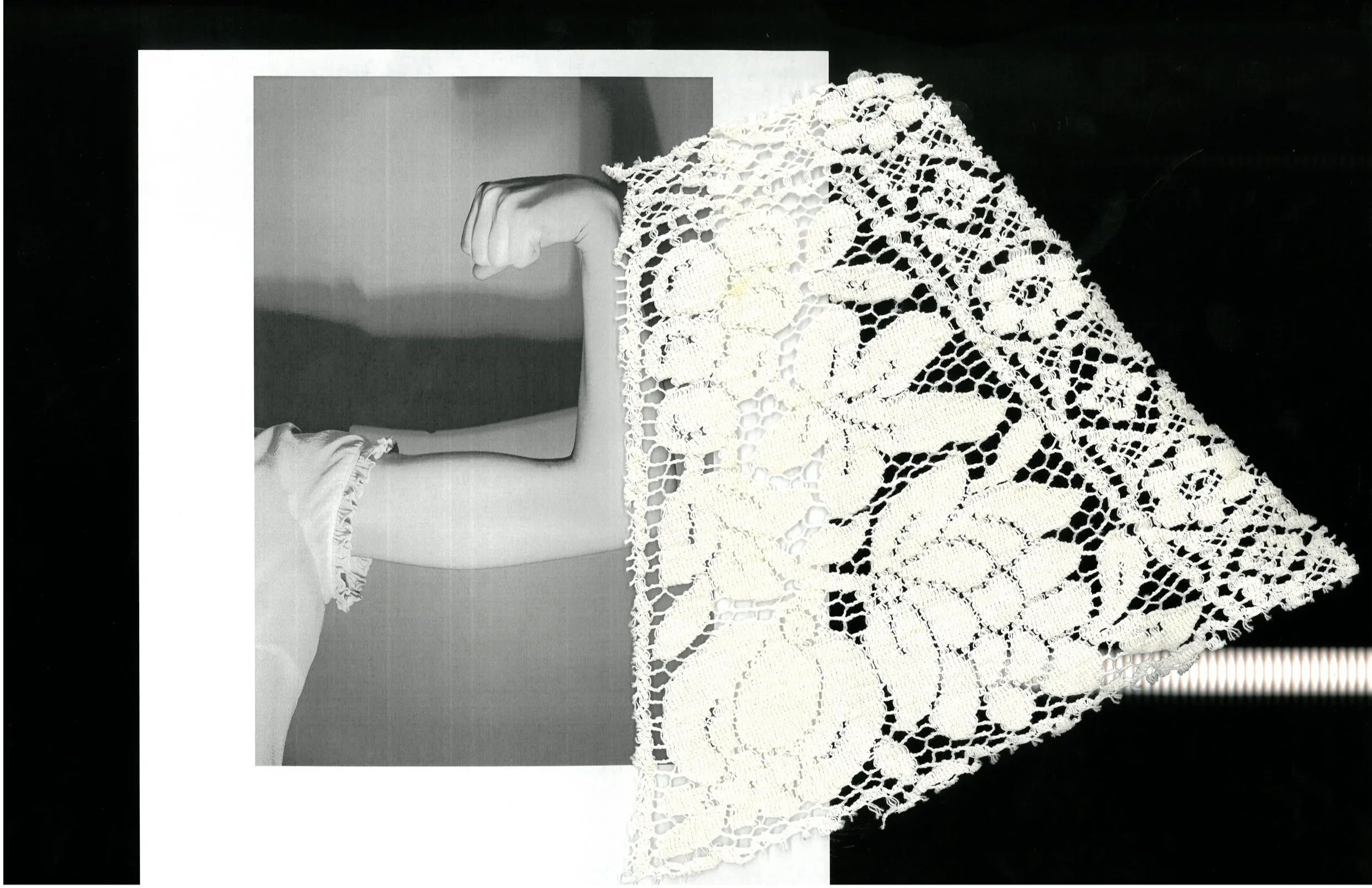


Veils
2026
Shot on a Canon EOS R8 edited in Photoshop.
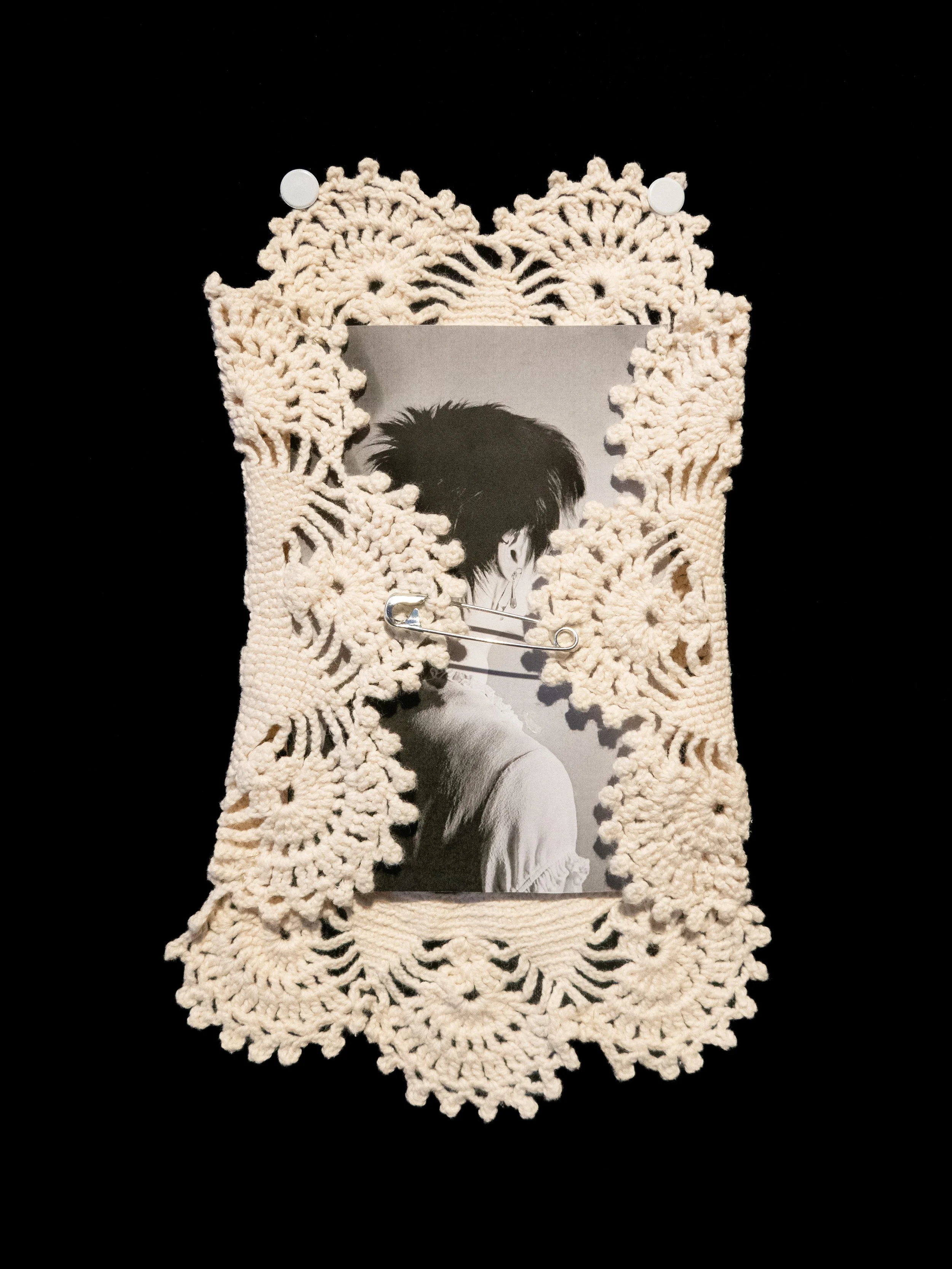
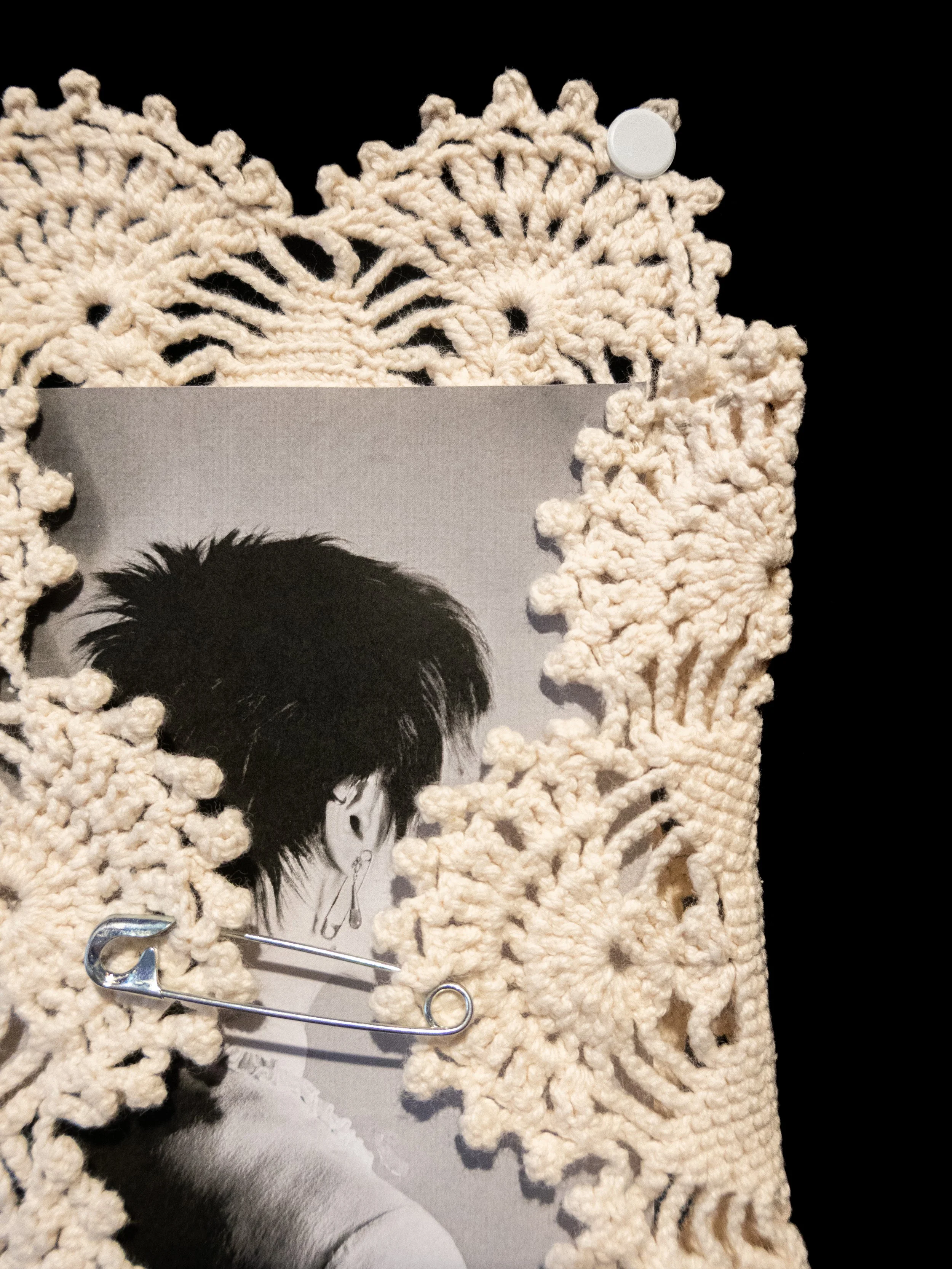
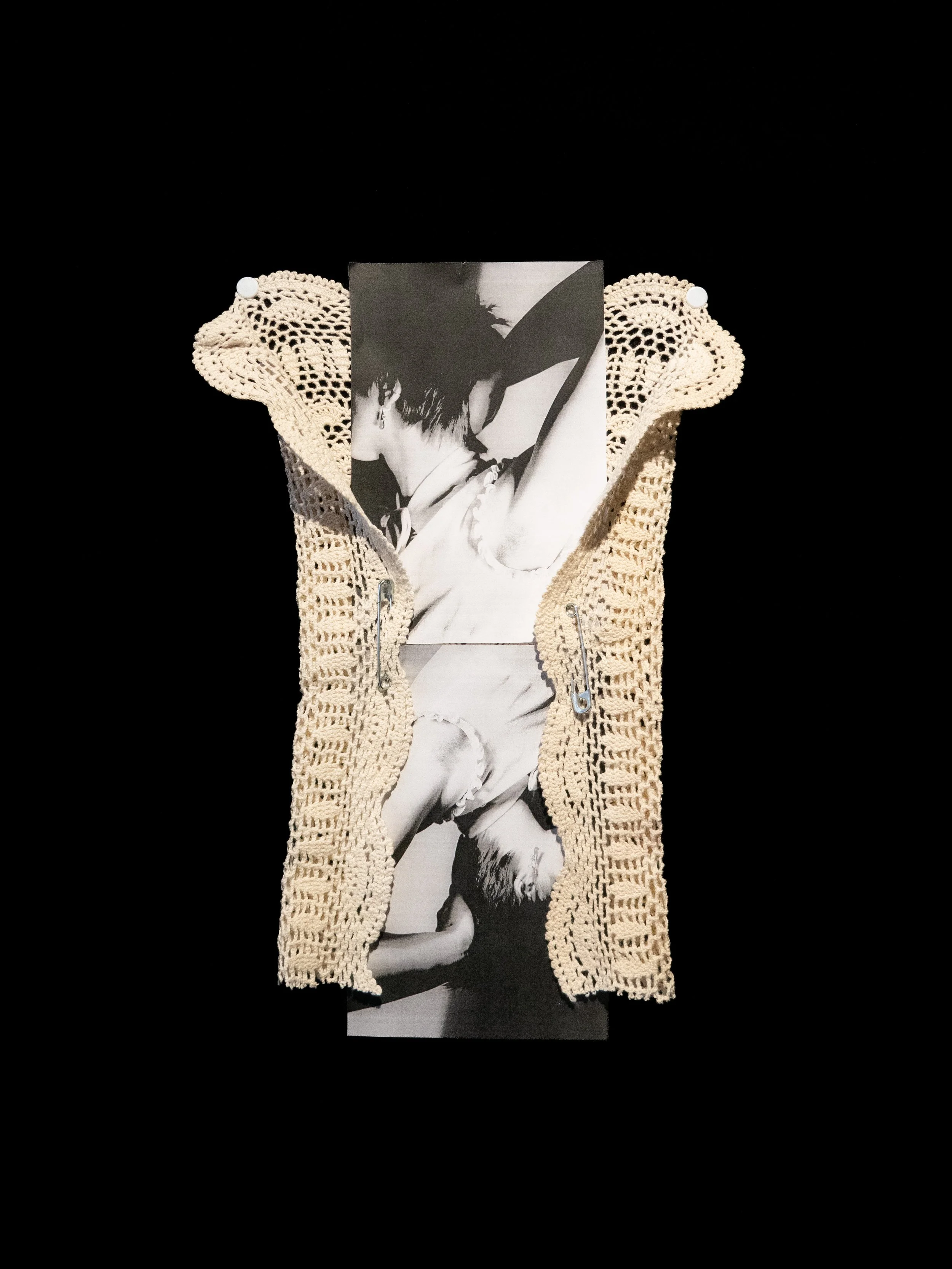
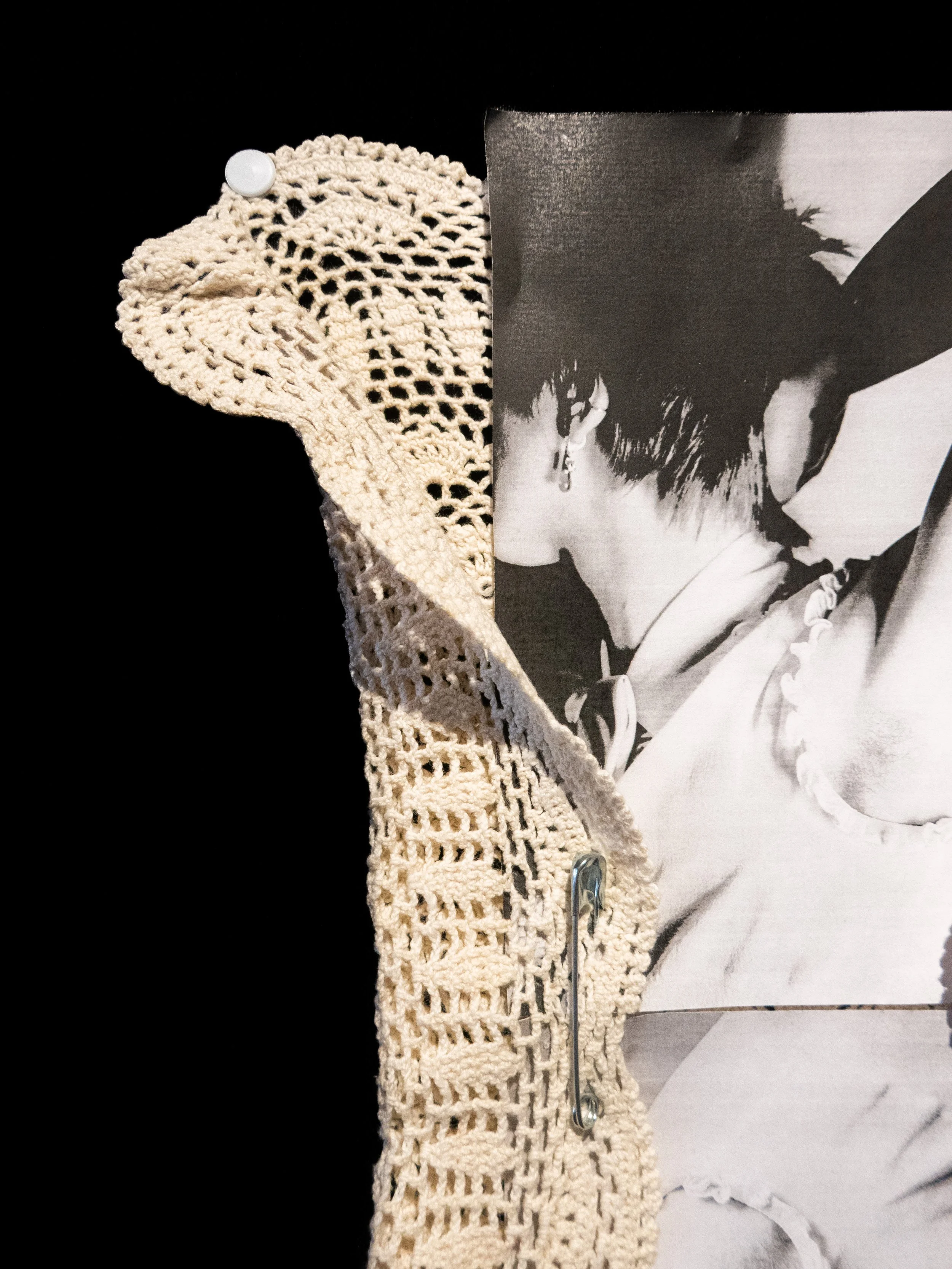
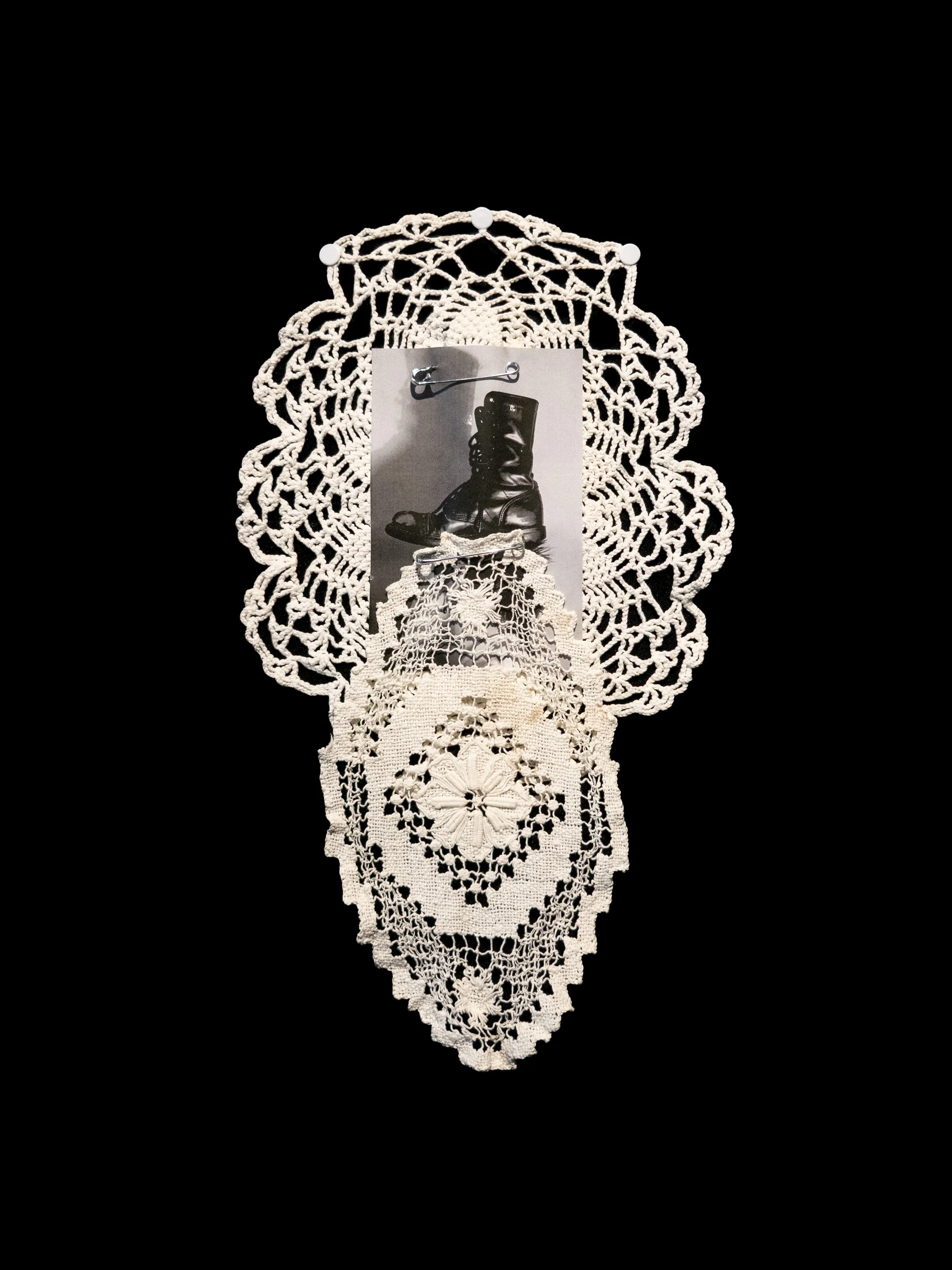
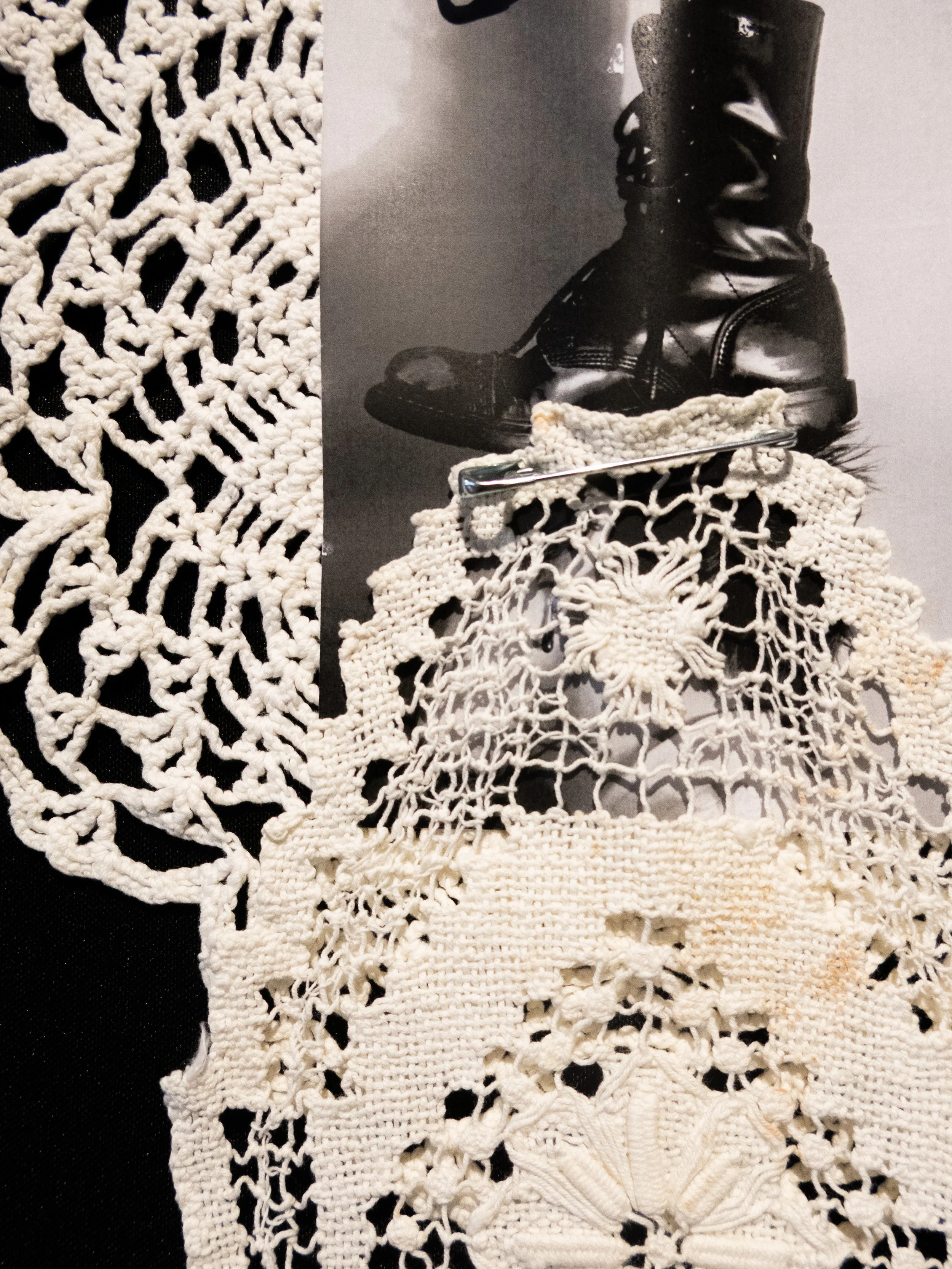
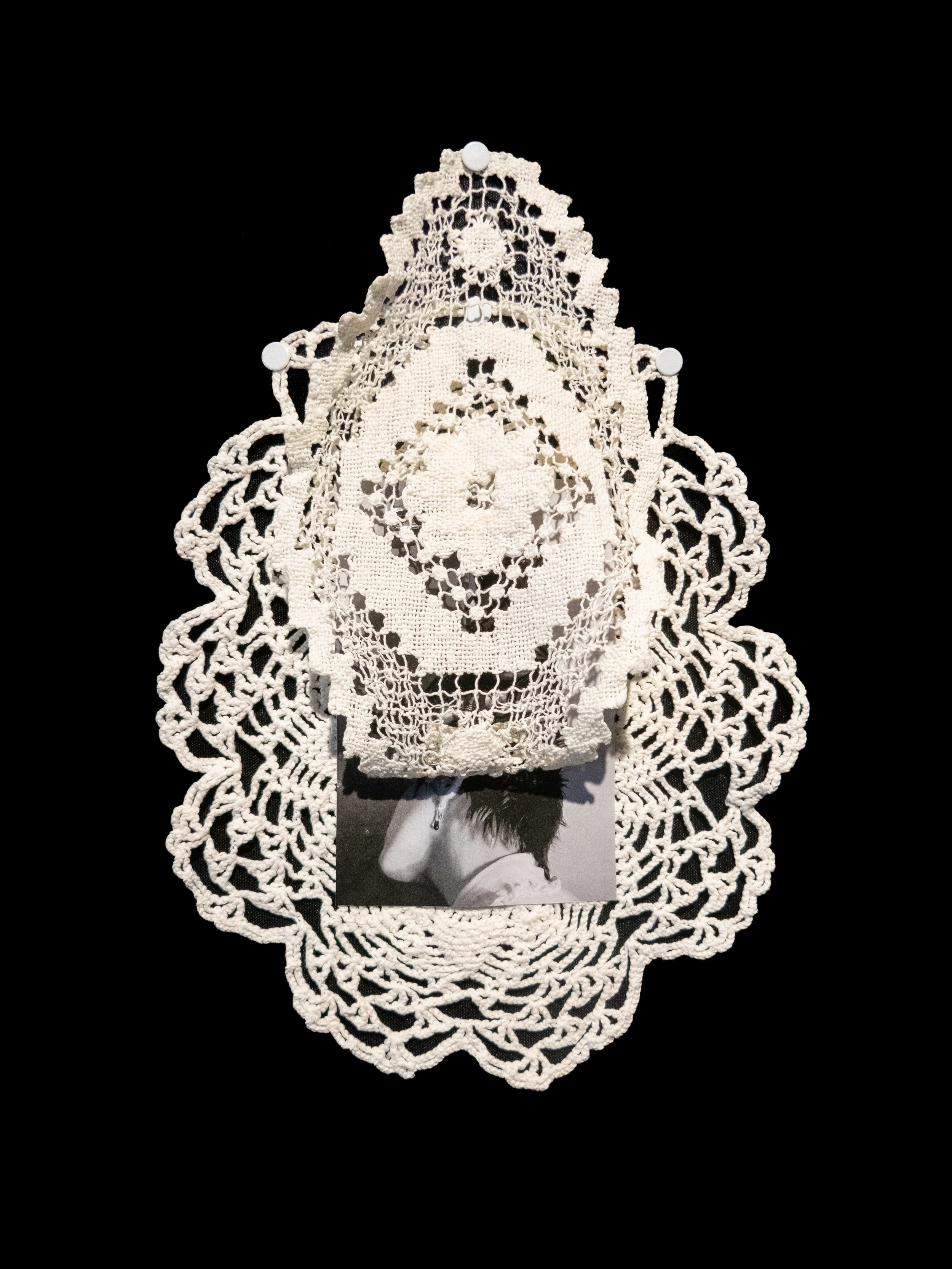
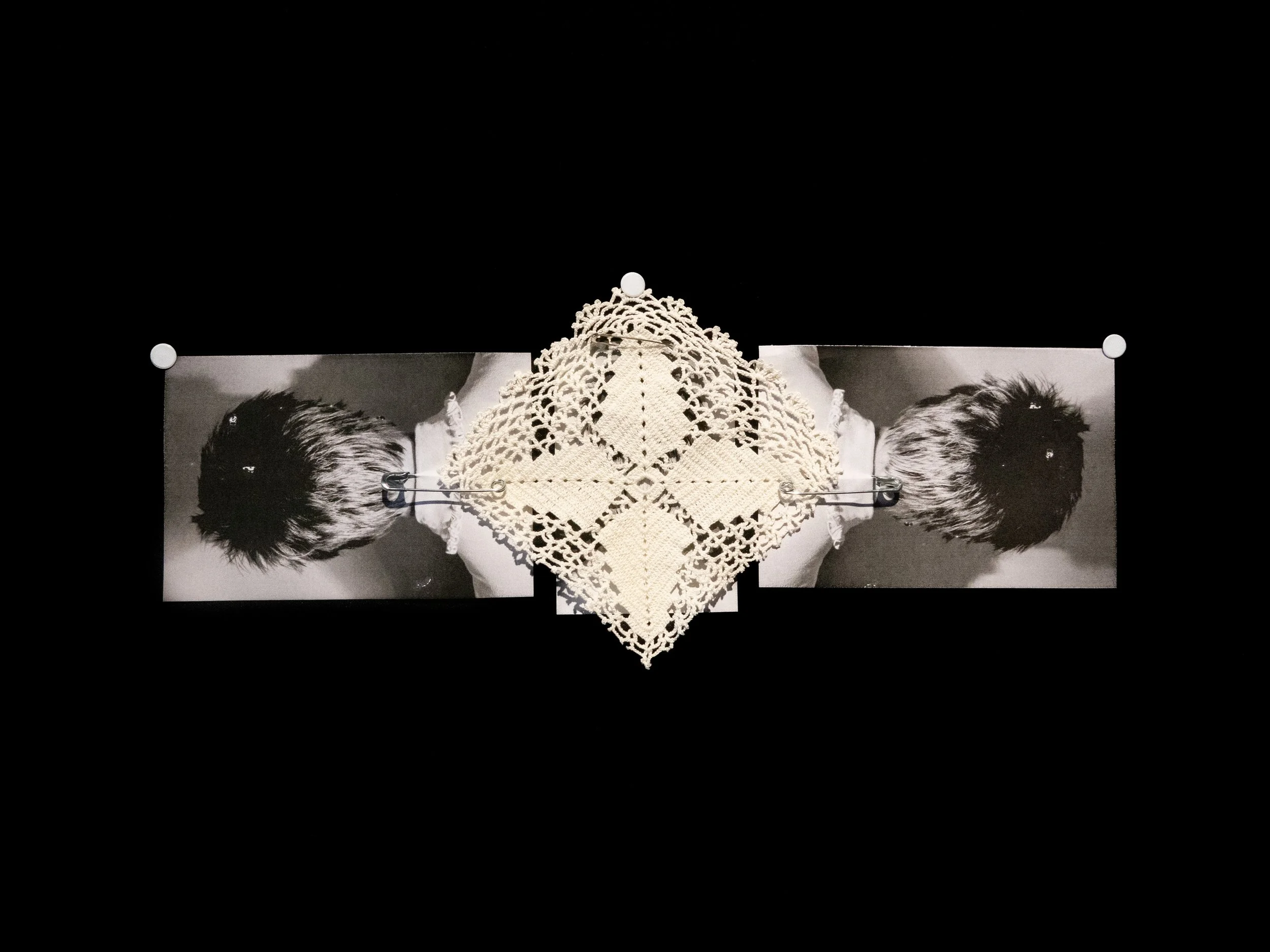
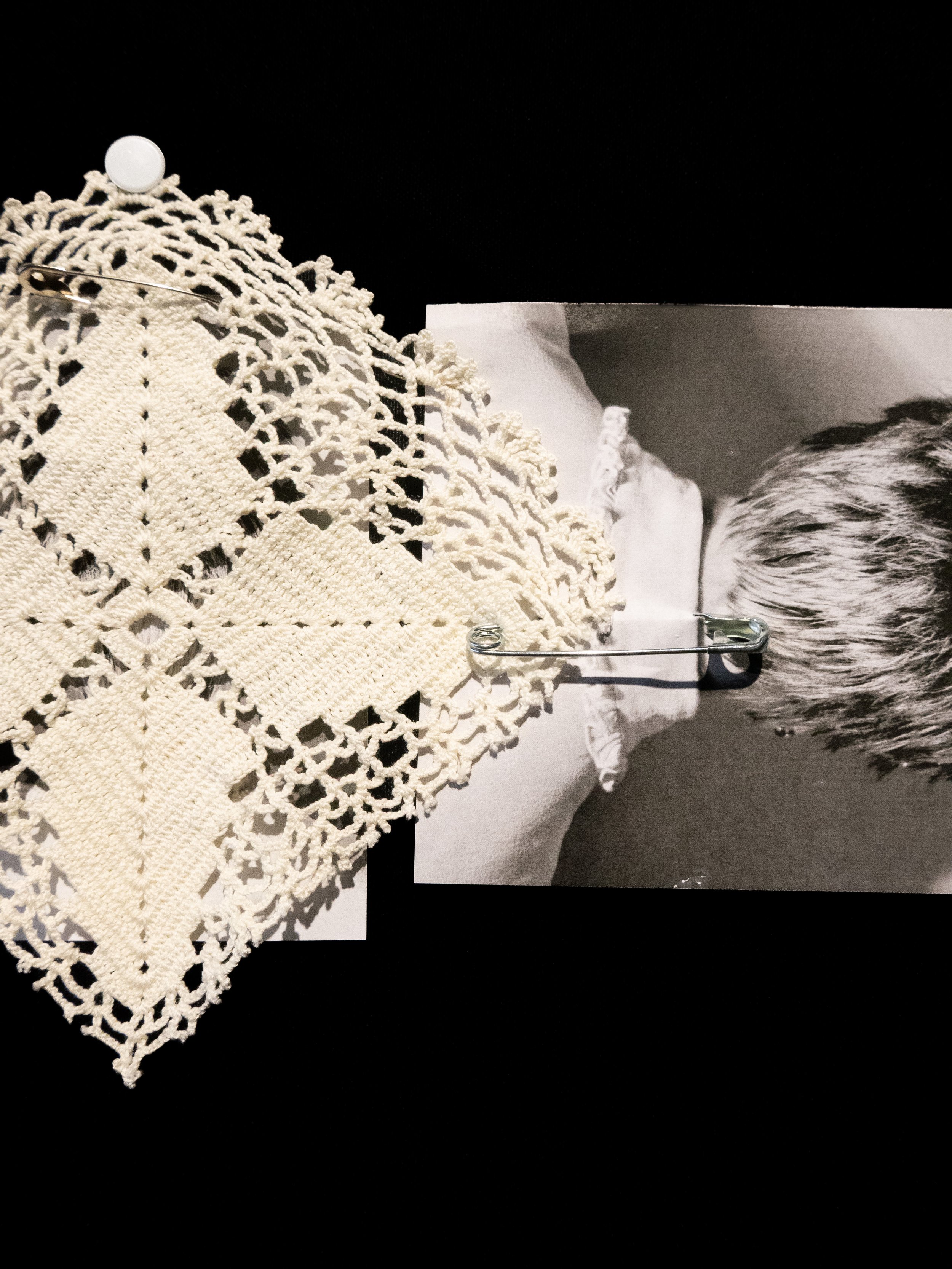
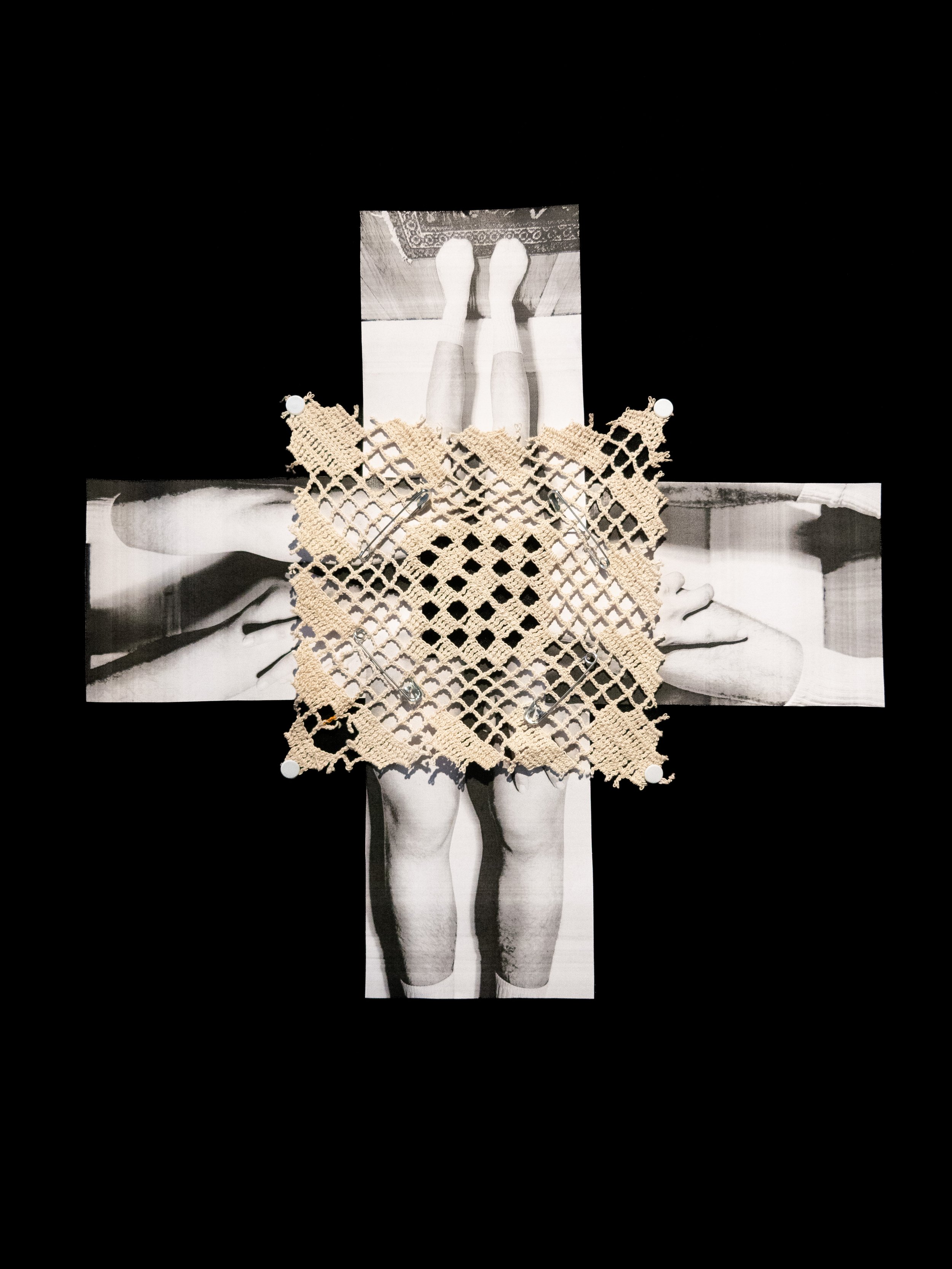
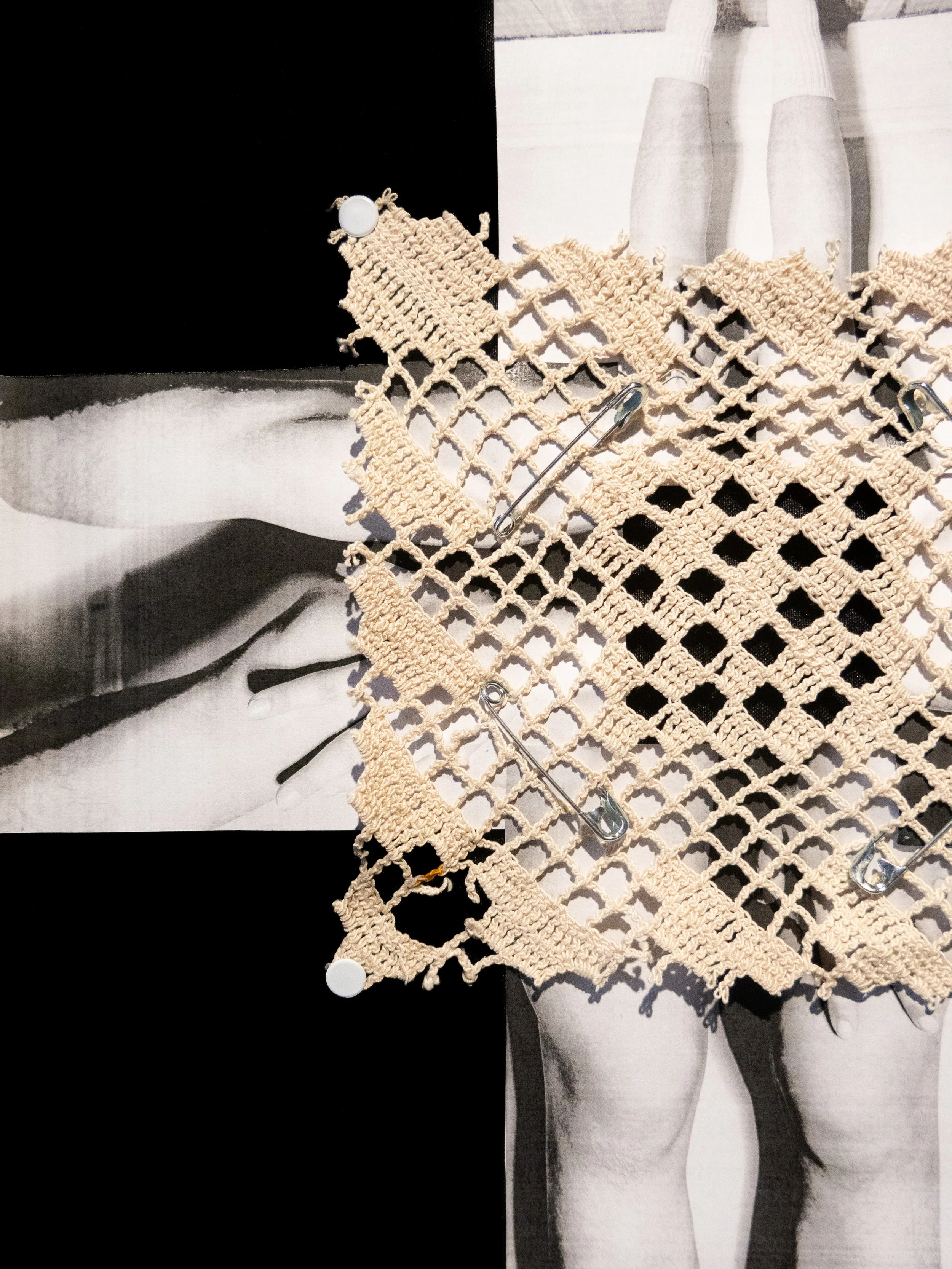
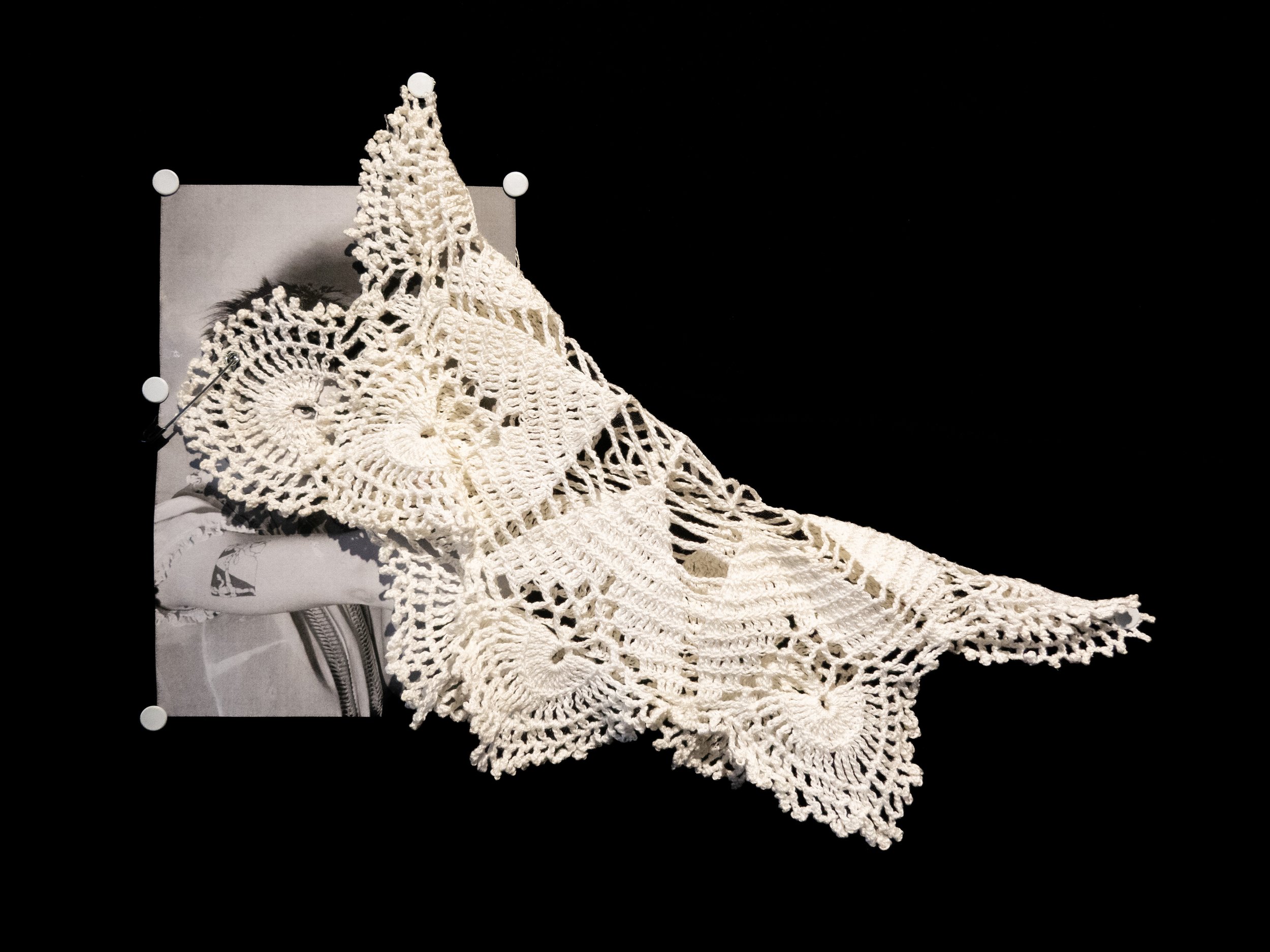
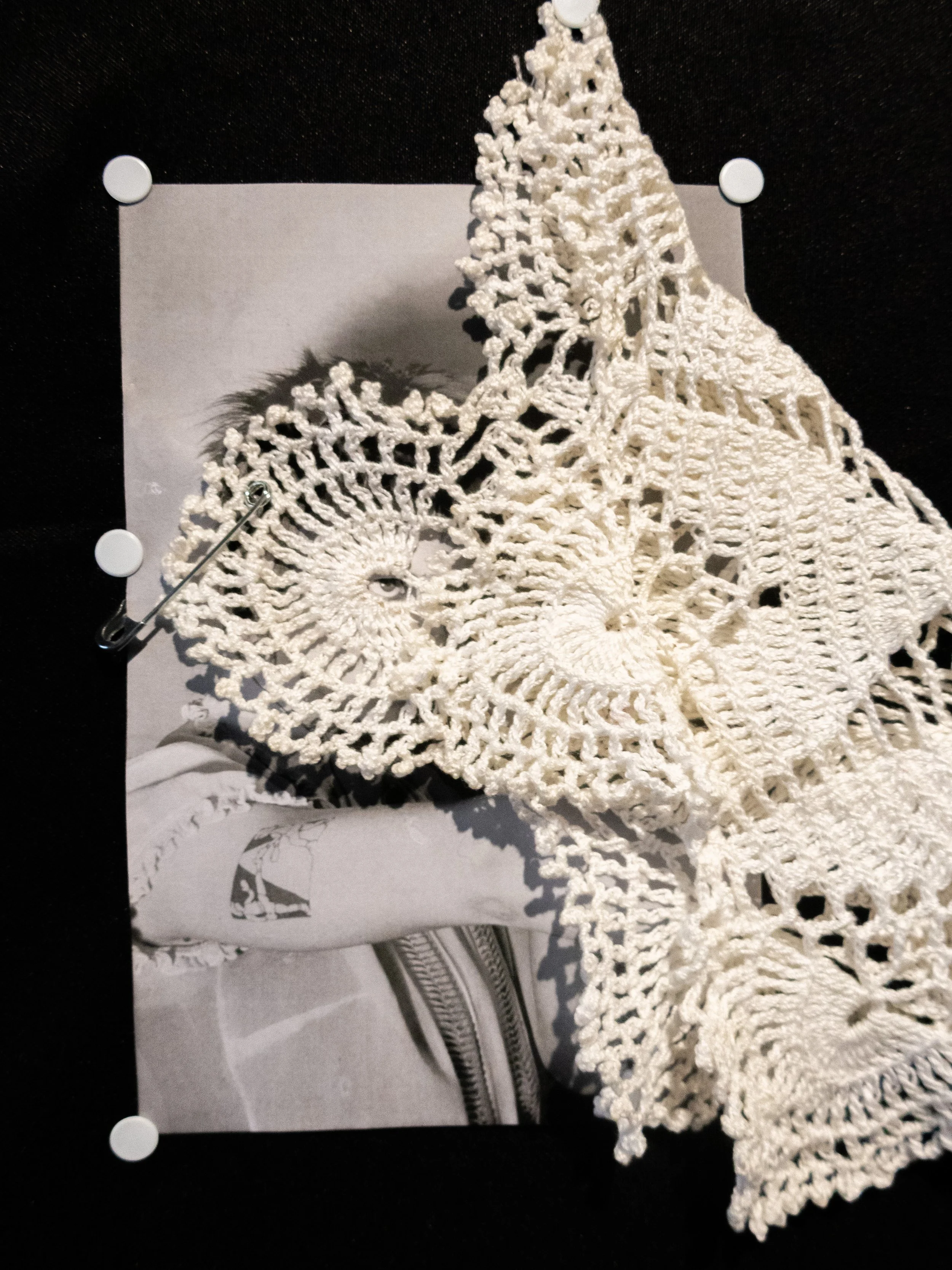
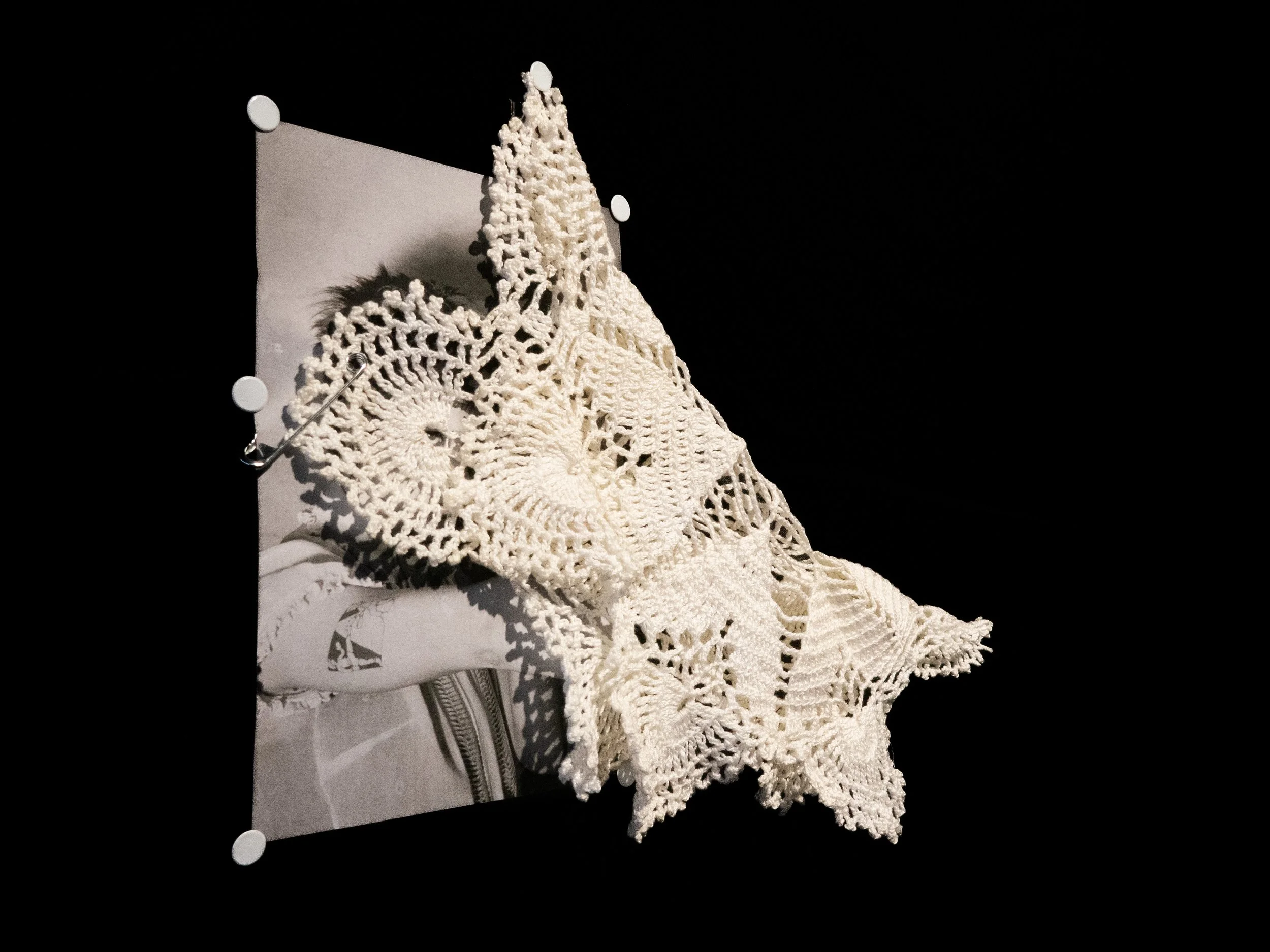
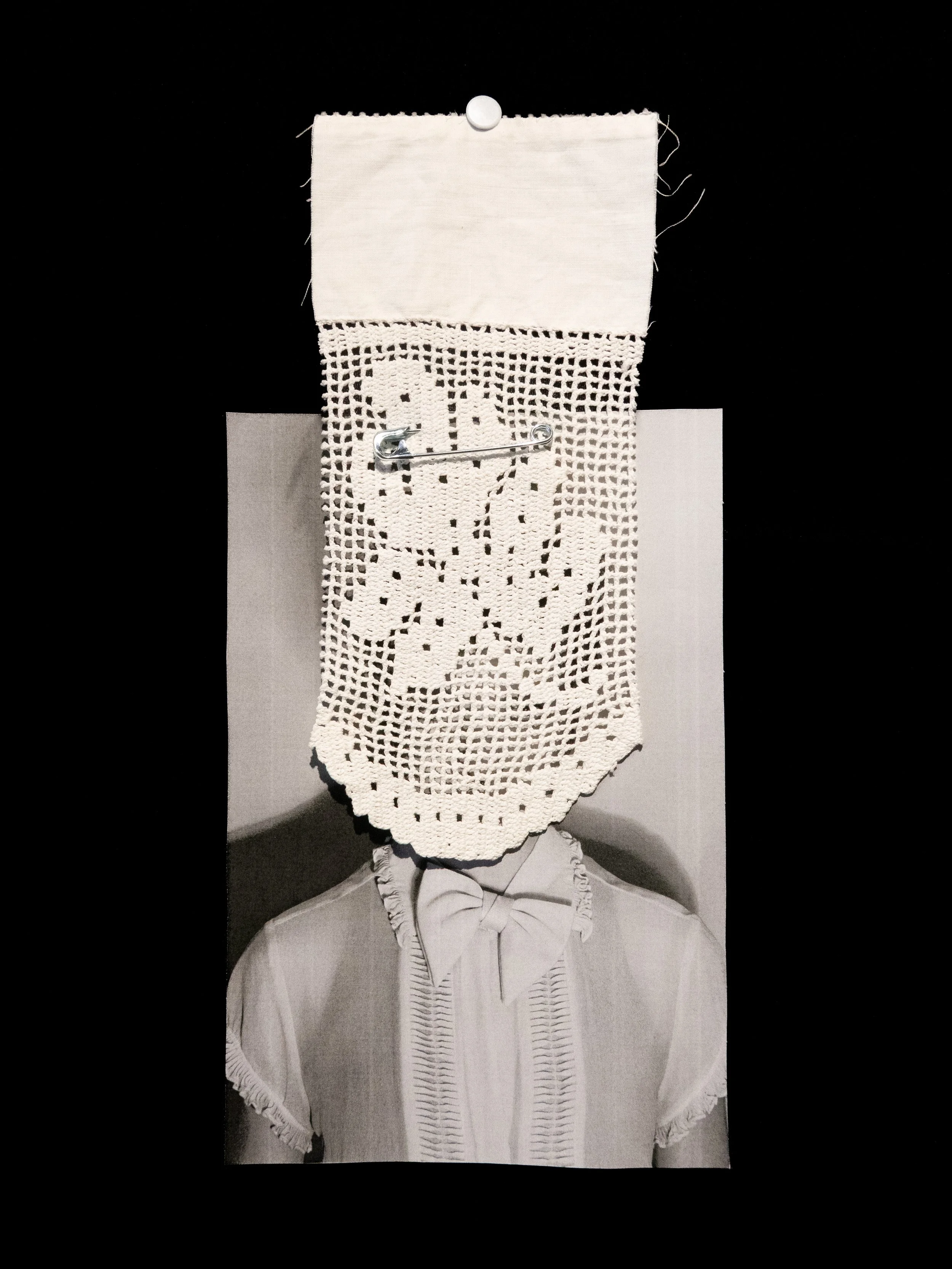
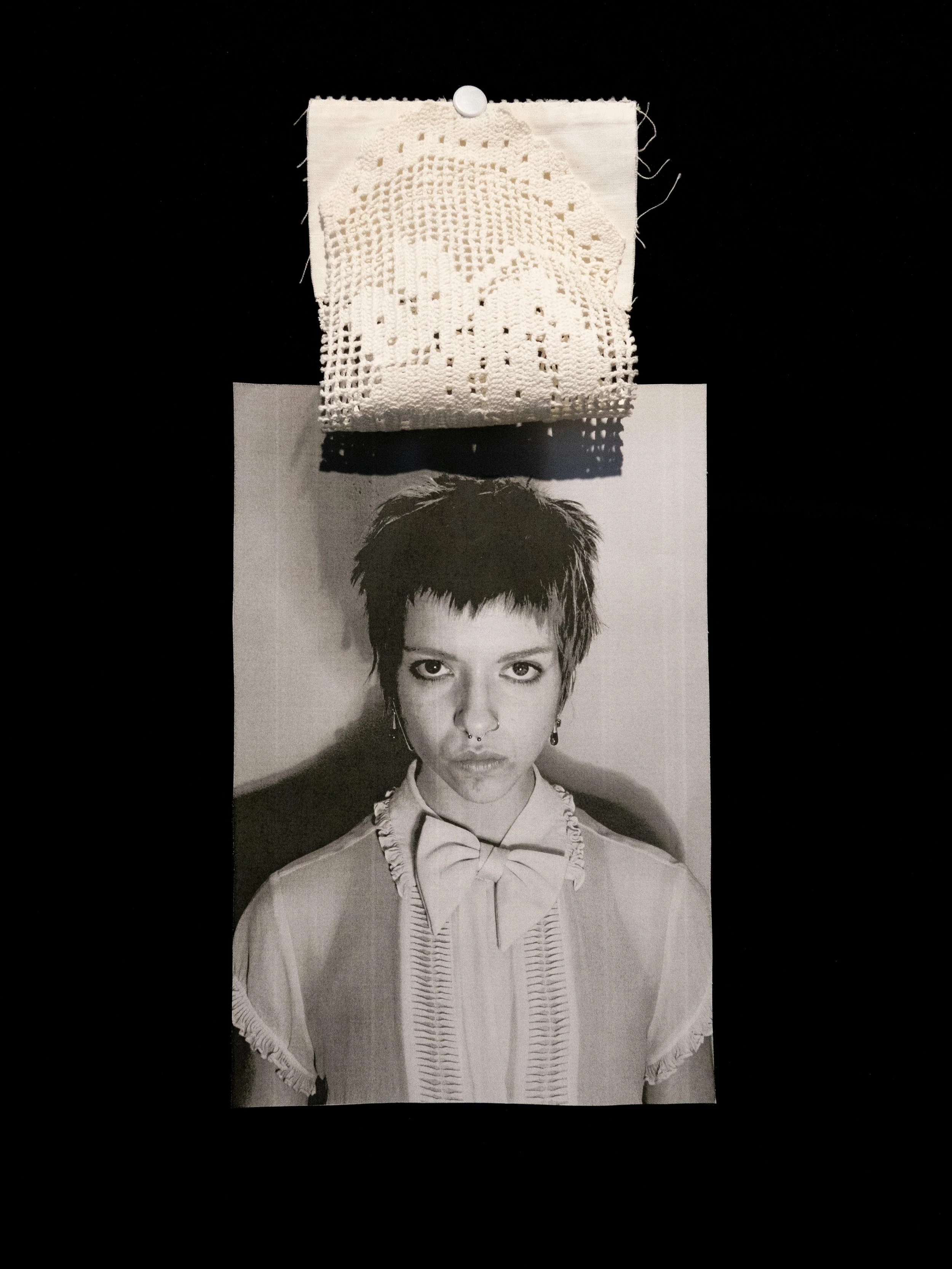
Printer paper, lace doilies, safety pins, embroidery floss
Recently, I have been intrigued by the use of the body to tell a story. The performances we do daily to render ourselves as female, or male, or a mysterious third state of being. My gender is something only truly known to myself, in the same way that yours is to yourself, but we cannot escape the gaze of the spectator.
I will always be assigned female at birth. There will always be people that look at me and see a woman. In some ways, I feel that these pieces are a reclamation of my femininity. I have pushed much of it away over the years because of the fear that I will only ever be perceived as female, but I can never take away that part of myself. I am not fully integrated. I do feel this sense of separation. Femininity feels both placed upon me, and as if it is protecting me. It is placed upon me by my audience, by the larger tenets of U.S. culture, but I am also shielded by this view that I am just like everyone else.
I feel that much of the time spent discussing trans identities and gender nonconformity is spent in a state of high alert. The narrative of the victim. And, while I believe that these conversations are incredibly important, I feel that there should also be room for strength and grace, and the whole range of human experience. This is why I find the idea of the lace doily so intriguing. It is an incredibly intricate and handsome textile. Something made to be admired, but not exclusively, it is also made for protection. I use the doilies as ways to highlight my photographs, but also conceal them.
The images themselves are a performance of my masculinity, while the veil of femininity hangs over me. Veils are myth; veils are biblical. They are a separation between the living and the deceased, the known and the unknown. They are stitched together, yet still not fully integrated. The masculine imagery versus the innate femininity of the lace. The lace textiles serve as both accentuators and armor. These portraits attempt to capture all of these ideas, while still holding on to a sense of self and an intimacy with the viewer, especially as they interact with the works. The veils are meant to be lifted, to see what is underneath the surface, and move into a world unknown.
Instead of rejecting this gaze, I take it upon myself to document it. What does it feel like to be stared at? Dissected on a train platform or in the doorway of the corner store. I record these moments in my journal, so I am able to return to their unique sensations. They are then reenacted for my digital camera, capturing my performances and contortions as self portraiture. In this case, the gaze emanates from the couch in my apartment. It has lived many lives in the homes of my great grandparents, my grandparents, my parents, a storage unit, and now the living room I call home. It has been the centerpiece of many of these couples homes, and now resides in my liminal space between male and female.